
Bow Padeye D Ring Repair can easily go sideways if you don't oversee the process!!!
Repair of Bow Padeye D Ring at your High and Dry Storage
Marco Esposito
1/27/20262 min read
⚓ Why Padeye / D‑Ring Repairs Go Wrong Without On‑Site Oversight
I work with a reputable fiberglass repair company recommended by reliable sources and I'm not mentioning names because this is not about bashing. It is about Caveat Emptor at all times! If the below pitfalls are not enough for you to make sure you make time to show up to your repair or have a captain that knows the scope of the project and what your boat or yacht's life has been and will be, here are a few more. It is actually a little bit comical and should leave you scratching your head (I did!!! and I called my provider and kindly shared my observations not complaints... it gets you nowhere):
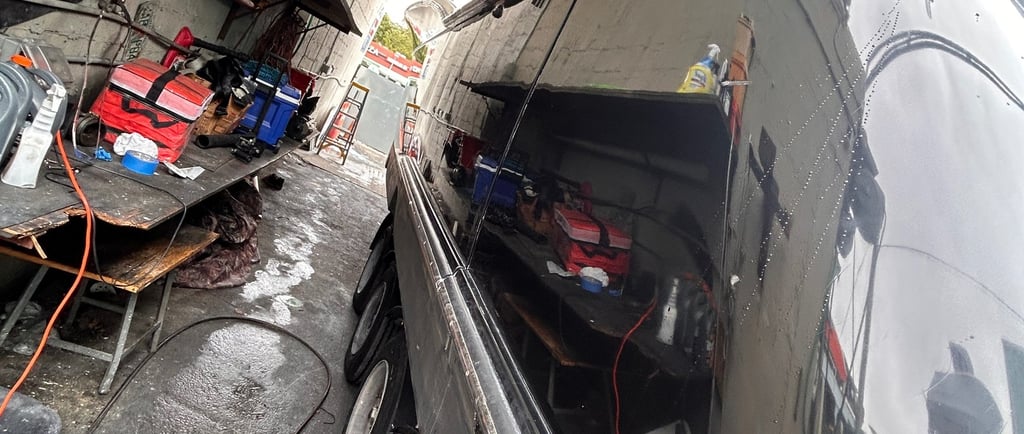
Tech did not have a hammer to reform the backing plate or a replacement. I fabricated a replacement out of 1/4 inch aluminum to reinforce the backing plate for the tech and provided the hammer.
Tech did not have a drill to get through the repaired fiberglass laminate install to re install the D-Ring Padeye. Being on site I provided the Makita Hammer Drill I keep in my truck just incase.
Tech did not have a socket set to tighten the nuts onto the bolts after the repair was done. Being on site I provided my Craftsman deep socket rachet set I keep in my truck just incase.
1. Techs often underestimate the load path
A Whaler’s padeyes aren’t decorative. They’re tied into:
the liner
the foam core
the backing plate (if present)
the hull laminate
If someone treats it like a simple “bolt‑on” job, they can crush foam, mis‑align the hardware, or create a leak path.
2. Incorrect backing plate choices
If you’re not there to insist on:
stainless vs. aluminum
correct thickness
proper bedding
correct footprint
…you end up with a backing plate that’s too small, too soft, or not bedded correctly. That’s how you get stress cracks later.
3. Over‑torquing or under‑torquing
Whaler hardware is notorious for:
being over‑tightened and crushing the core
being under‑tightened and working loose
Both failures start invisible and become expensive.
4. Wrong sealant = future water intrusion
If you’re not there to specify:
4200 vs. 5200
polysulfide vs. polyurethane
no silicone
…someone will grab whatever tube is open. That’s how you end up with water in the core and a repair that spirals.
5. Misalignment that only the captain notices
A yard tech may think “close enough.”
A captain or vessel manager sees:
load angles
chafe points
tow line geometry
anchor rode behavior
If the D‑ring is off by even a few degrees, it changes how the load transfers into the hull.
6. No one checks the foam or laminate condition
A proper repair requires:
probing the core
checking for moisture
confirming laminate integrity
If you’re not there, they skip it. Then the new hardware is mounted over a compromised substrate.
7. Communication gaps
You know exactly what the boat has been through.
The yard does not.
If you’re not on site, assumptions get made — and assumptions sink repairs.
Contact
Reach out anytime, we're here 24/7
info@trusteddeliverycaptainsofmiami.com
+1-305-697-8487
6
Careers
New partners are always invited to join us. As noted previously, a preference is given to civil servants, first responders and active or military veterans. Please submit your CV to info@trusteddeliverycaptainsofmiami.com
Mobile
© 2026. All rights reserved